Creating Follow-up Actions
Marketing users can execute more complex campaigns and journeys with automated follow-up actions to their campaign or journey's primary action. This streamlines the process of engaging different target segments with tailored content and sequences of messages, enhancing the effectiveness and efficiency of marketing efforts.
For example, a follow-up action is created by default for every segment with a primary template selected. This default follow-up action resends the primary email template seven days after the initial email to users who did not open the initial email.
Multi-action journeys using the Builder tab use a dedicated UI to add additional actions and splits based on email engagement.
Who can use this feature?
- Marketing Users - Browser
- Adding Follow-up Actions
- Editing Follow-up Actions
- Users require a Campaign Manager license
Configuring Creating Follow-up Actions for
 Marketing Users
To configure this feature, ensure Configuring Campaign Manager is complete.
Adding Follow-up Actions as
Marketing Users
To add a new follow-up action:
-
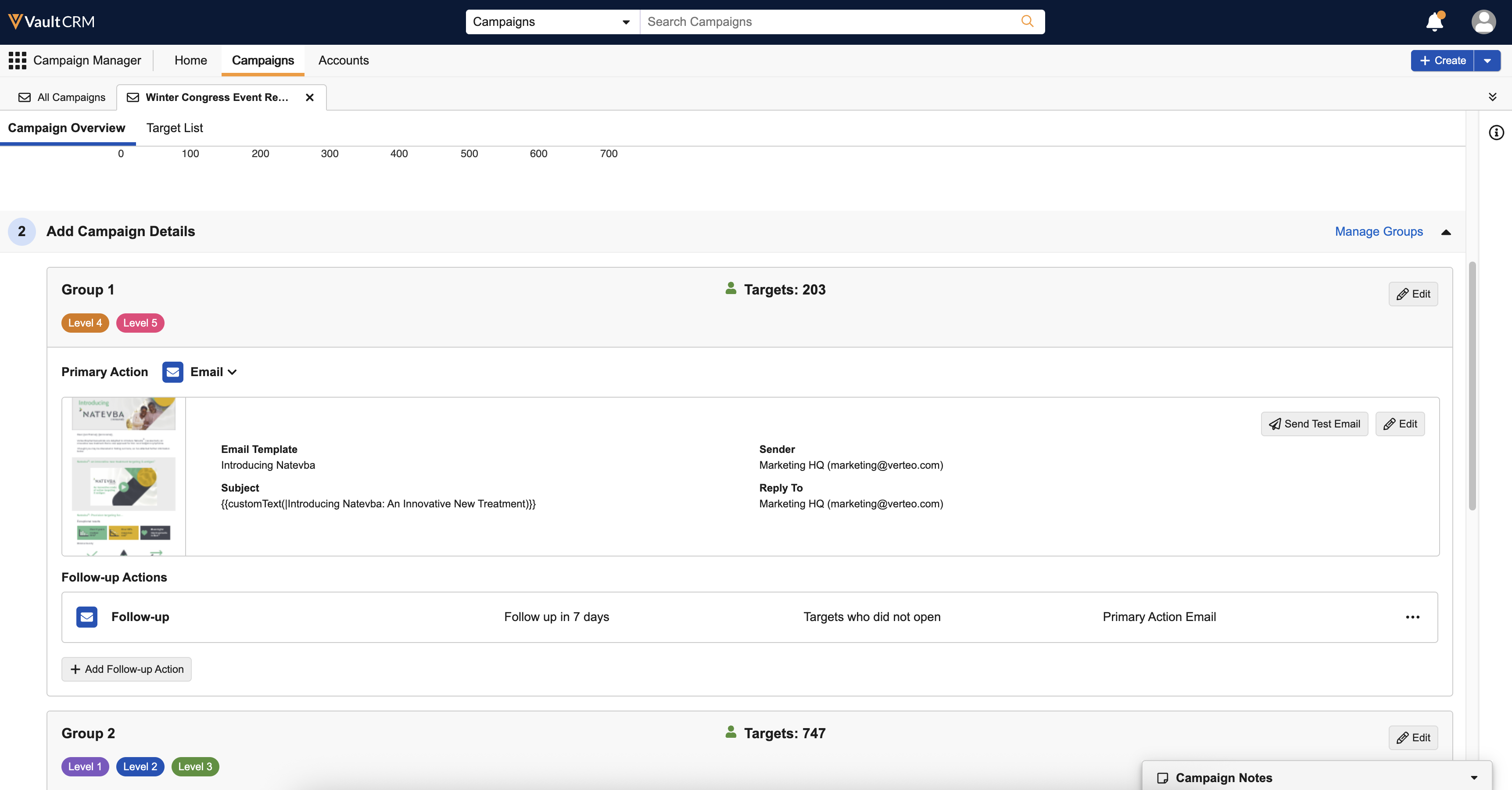
Navigate to the Add Details section of the appropriate Multi-Action Campaign or Journey.
- Navigate to the appropriate flow.
- Select + Add Follow-up Action at the bottom of the flow's section.
-
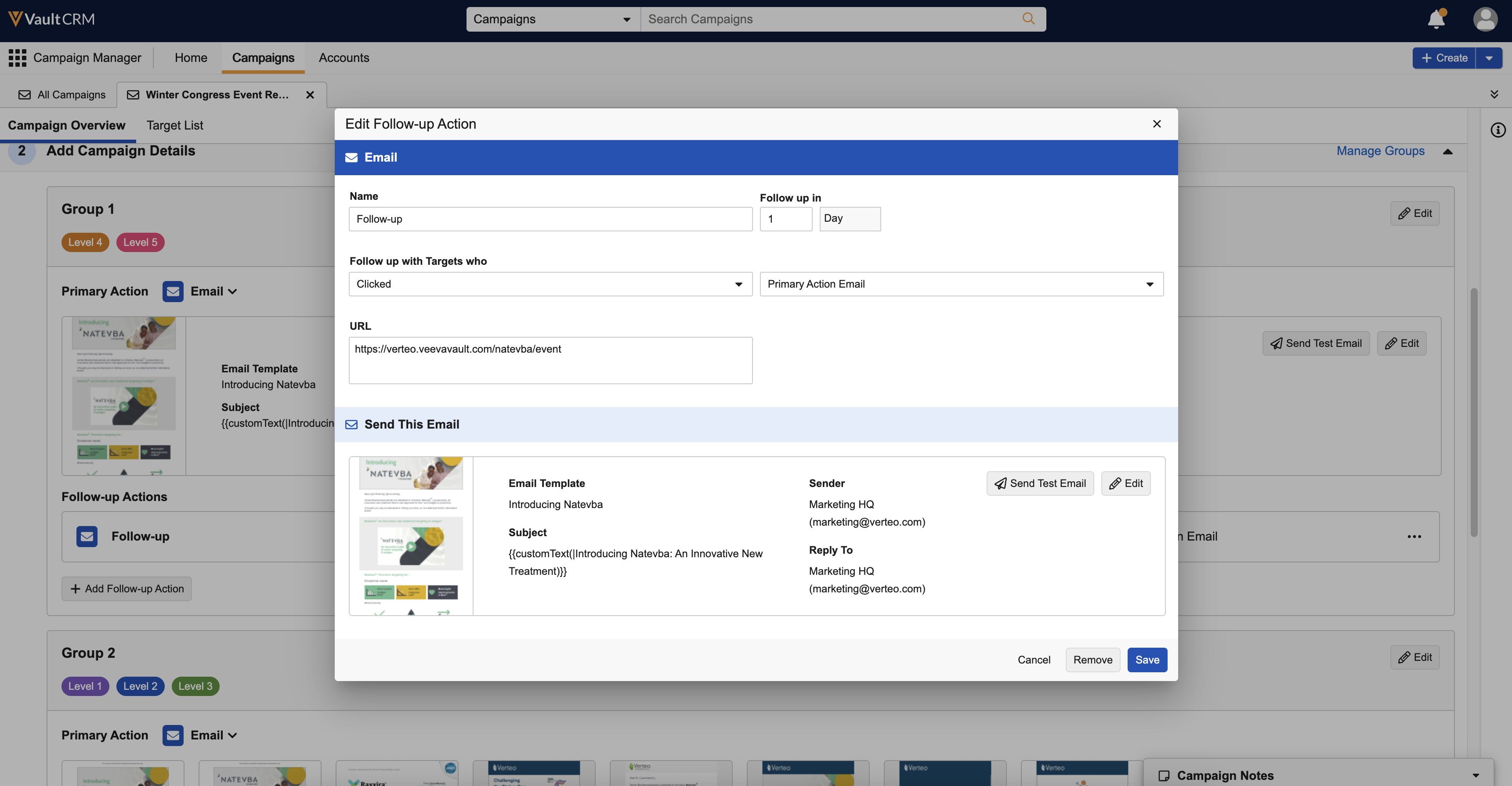
Populate the following fields:
- Name – Enter the appropriate name. The default value is Follow-Up.
-
Channel – Select the appropriate channel. Available channels are:
- Field Email
-
Specific channel availability is still dependent on using a campaign versus a journey.
- Follow up in – Enter the number of days after the action email is sent to send this follow-up action
- Follow up with Targets who – Select the appropriate target segment to send the email to, based on how the primary action email or a follow-up action email was interacted with. The following options are available:
- Did not open
- Opened
- Did not click
- Clicked
- Action Email selection – Determines which action email initiates the new follow-up action. The following values are available:
- Primary Action – The main action defined for the flow that is sent as part of executing the campaign or journey. If no other follow-up actions exist, this is the required selection.
- Any other existing follow-up action that can have a follow-up
- URL – Enter one or more comma separated URLs from the corresponding action email that must be selected or not selected for a target to be eligible for the follow-up action. Eligibility is determined based on the selected value in the Follow up with Targets who field:
- Clicked – The target is eligible for the follow-up email if at least one URL in the list was selected
- Did not click – The target is eligible for the follow-up email if none of the URLs in the list were selected
- Send This Email – Select the appropriate email template
URLs with populated or unpopulated tokens are not supported. However, URLs match based on a Starts With search against any URL selected by the recipient from the corresponding email. For example, if one of the URLs entered in this field is https://example.com/product, and a target selected the personalized URL https://example.com/product/123?ref=abc, it counts as a match. This means that personalized and tracking URLs can be tracked and supported by including the base URL.
This field only displays if Did Not Click or Clicked is selected for the Follow up with Targets who field.
- Select Save.
Previewing and Sending Test Follow-up Emails
Users can preview and send test emails for follow-up actions just as they would for the segment's primary email, enabling users to confirm content and token rendering:
- Select the Edit button for the follow-up action.
- Hover over the template thumbnail icon in the Edit Follow-up modal.
- Select Preview.
Switching to the Journey Builder for Existing Journeys
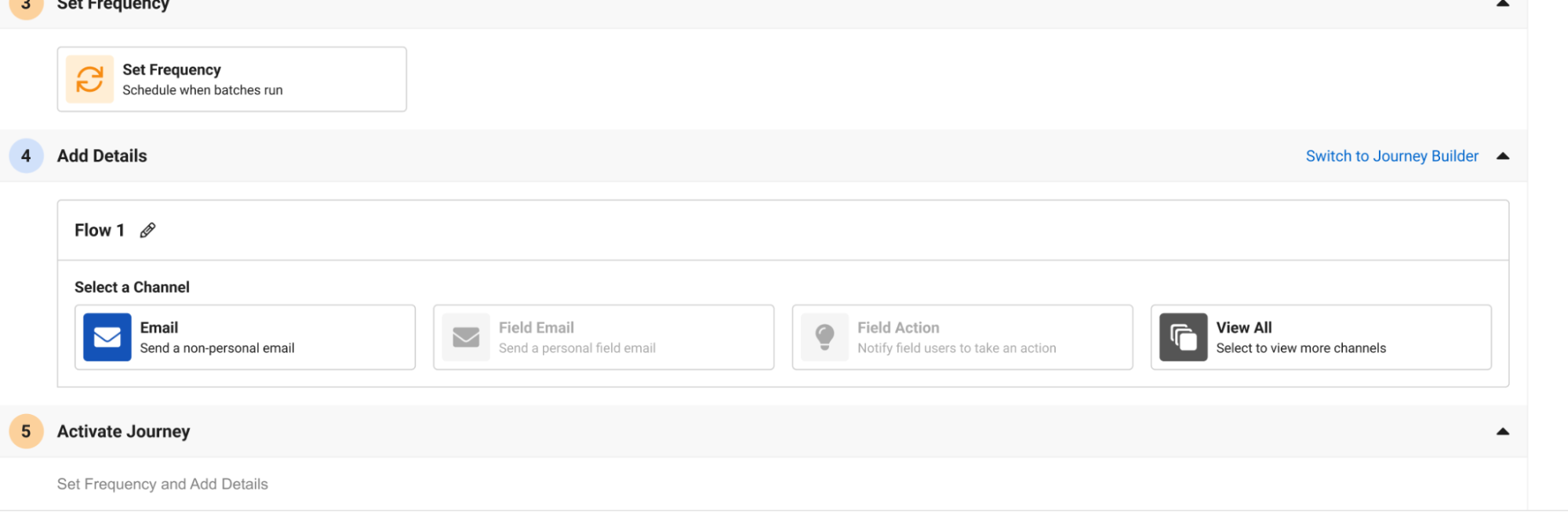
To switch journeys created prior to the 26R1.4 release to the Journey Builder, select the Switch to Journey Builder link in the Add Details section of the Overview sub-tab.
Selecting this link removes all existing flows, actions, and segmentation.
Editing Follow-up Actions as
Marketing Users
When the primary email template is selected, a follow-up action is automatically created for each segment. This follow-up action has the following properties:
- Name – Follow-up Action
- Channel – Email
- Follow up in – 7 Days
- Follow up with Targets who – Did not open
- What – Primary Action Email
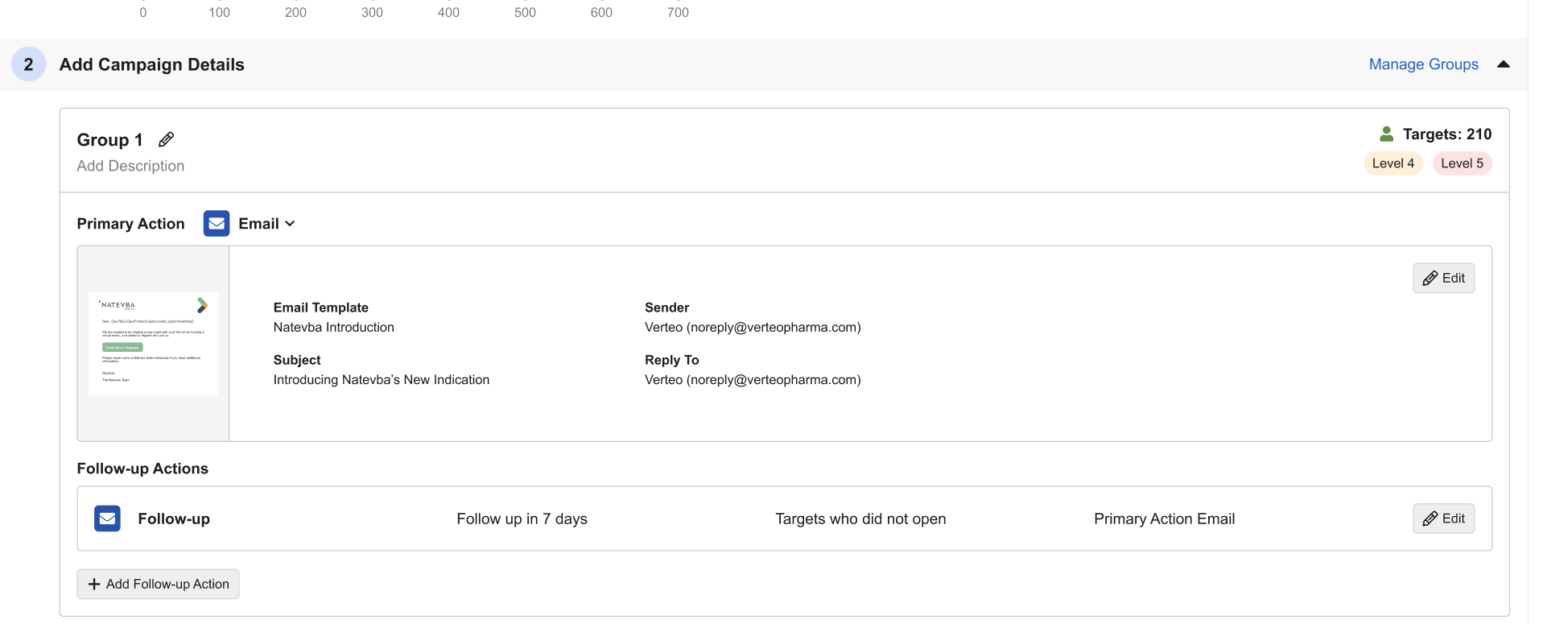
Users can edit this default follow-up action as well as any created follow-up actions by selecting the Edit button next to the appropriate action.
From the Edit modal, users can select Remove to delete the follow-up action. When a follow-up action is removed, any other follow-up actions based on the removed action are also removed. If the Primary Email template is removed from the flow, all of the flow’s follow-up actions are removed.