Account Views and Lists
Users have two main ways to organize accounts: views and lists. Both display in My Accounts to allow users to organize and easily find accounts.
Vault CRM maintains the last view and territory selected by the user in the My Accounts screen. These selections are stored in the preferences__v object, allowing users to maintain these selections across sessions. Selecting a territory from My Accounts displays that territory and all territories below it in the Territory Hierarchy. For information on the All Accounts option in the Territory drop-down menu, see Visibility of Accounts and Territories.
The columns displayed on the screen are based on the selected filter and rely on the online configuration for the account views and account lists available in the filter. The actions available are based on online configuration and user permissions.
Who can use this feature?
- Business Admin Users — Browser
- Creating Account Views
- Creating Account Views for Child Accounts
- End Users — Browser, iPad, iPhone, Windows
- Accessing Account Views in My Accounts
- Using Account Views for Child Accounts
- Displaying Child Account TSF Information in My Accounts
- Dynamic Attributes in My Accounts Views
- Searching Account Views
- Exporting Views to CSV or Excel
- Creating an Account List
- Deleting an Account List
- Dynamic Attributes in My Accounts Lists
- Searching Account Lists
- Exporting Lists to CSV or Excel
- Users do not require an additional license
Configuring Account Views and Lists for
 All Users
To configure this feature, ensure Configuring Accounts is complete. If Child Accounts are used, ensure Configuring Child Accounts is complete.
To display different account, address, or TSF-related information for each account in an account list, or to add a column to the account list, update the ACCOUNT_LIST_COLS Veeva Message.
To enable users on the Browser platform to download Accounts via Excel or CSV from the My Accounts screen, deselect the Disable Account Download CSV Excel Veeva Setting checkbox.
To allow business admins to manage public and shared views:
- Navigate to Admin > Users & Groups > Permission Sets.
- Select the appropriate permission set.
- Select the Application tab. For information on application permissions, see Application Permissions.
- Grant Make Mandatory permission for Views.
- Grant CRED access to the view__v object.
Profile-specific functionality for My Accounts views is controlled by Application Profiles.
Using Account Views as
Business Admin Users
Creating Account Views
To create a view and specify filters:
- Select Create New View from the Views and Lists sub tab in My Accounts.
- Select a visibility setting in the Visibility field. Public views are accessible by all users. Profile-specific access allows sharing views with specific application profiles.
- Select the Account Types to include in the view.
-
Use the drop-down menus for the Include field to filter by account record ownership and preferred address.
If My Preferred Addresses is selected, the view only displays address data for the account's preferred address in the user's territory. Accounts without a preferred address for the territory display with the primary address in the view. If All Addresses is selected and an account has multiple addresses, a separate record displays for each address.
- Specify filters in the Search Criteria section.
My Accounts filtering supports the following data types:
- Yes/No field
- Picklist
When users select filters in the search criteria, up to 1000 picklist options display.
- Text
- Number
OR conditions are not supported as criteria for My Accounts Views.
- Select and order the columns to display in the appropriate order.
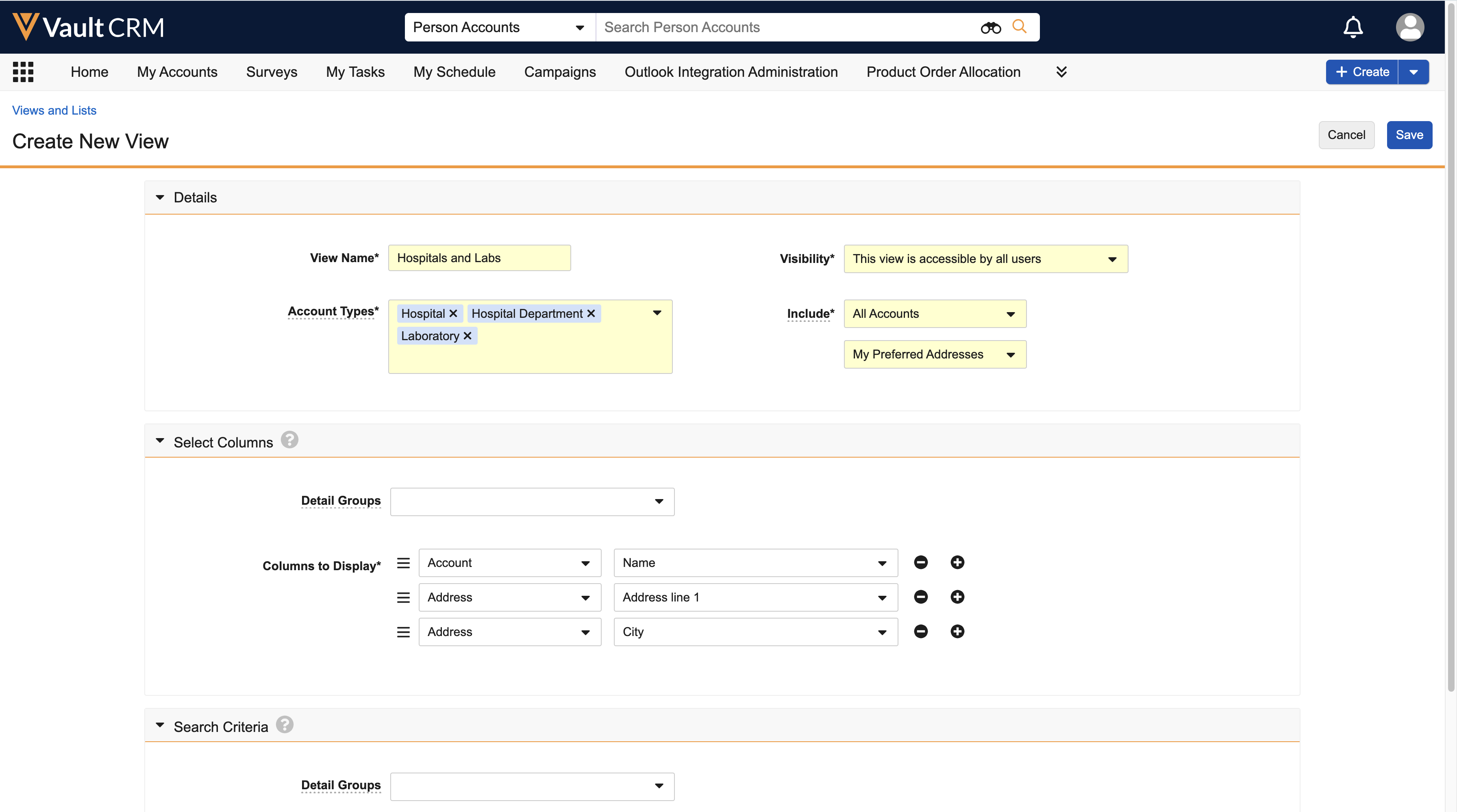
Users require at least read field permission to the fields displayed in the view.
- Select Save.
The My Accounts page displays the newly created view.
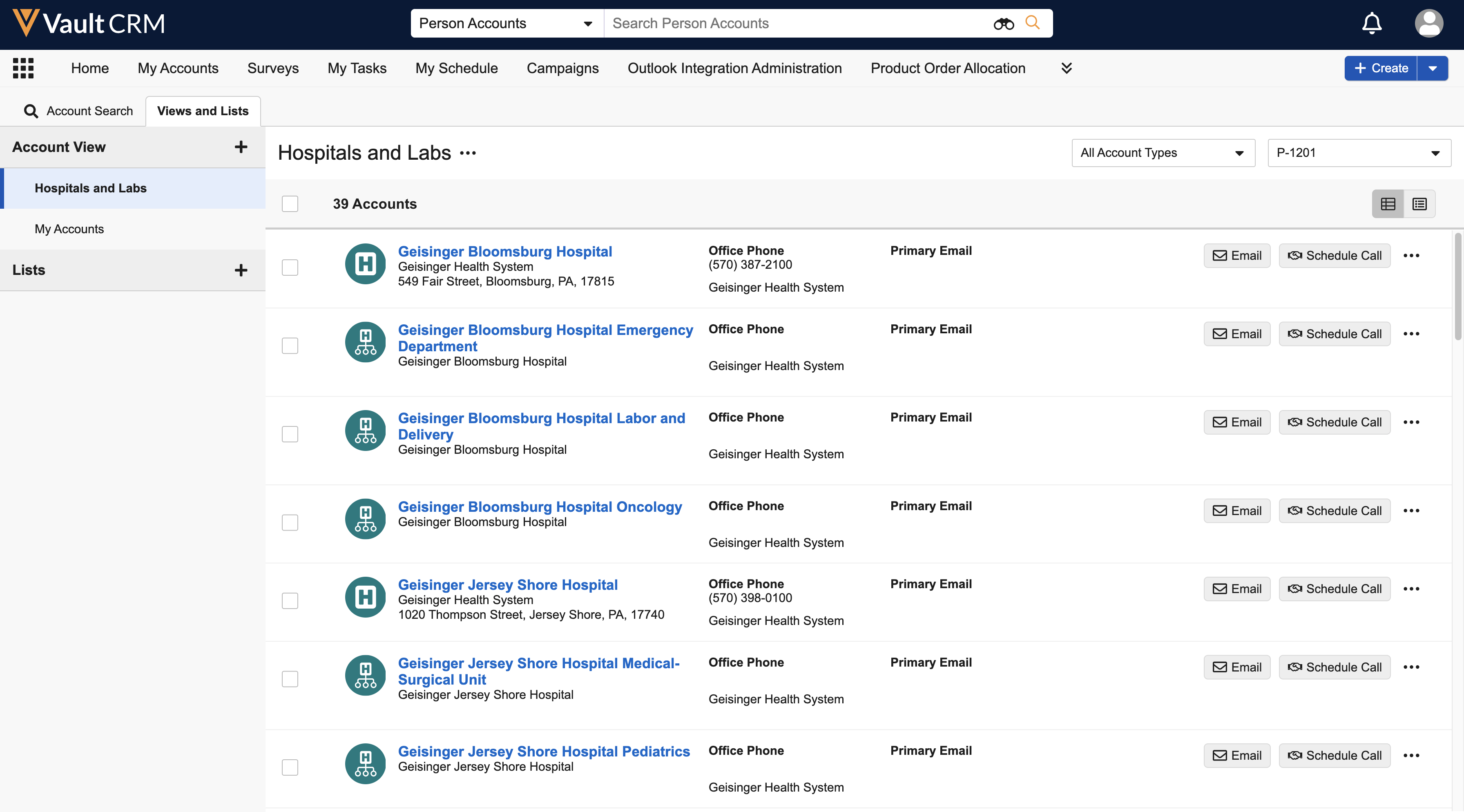
Business admins can view public and shared views on the My Accounts page even if shared views are not shared with their application profile. They can also manage public and shared views on the Browser platform, if configured.
Creating Account Views for Child Accounts
To enable users to access child account records from My Accounts, admins can create child account views. Child account views display the child account records. The configured fields and filters can be based on the child account record.
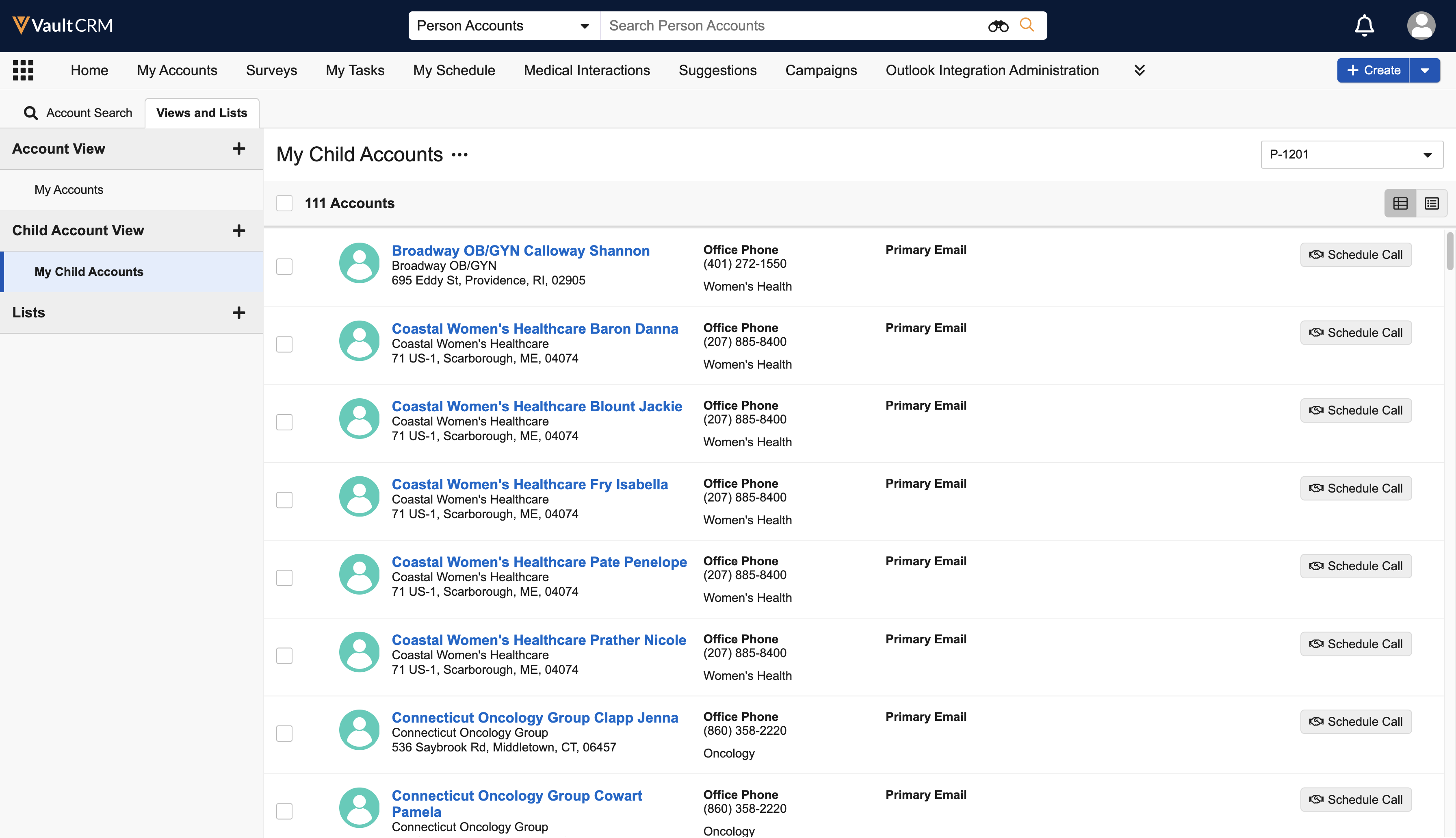
For example, users can view information from the account__v, address__v, child_account__v, and childaccount_tsf__v objects for the child account.
Business admin users can create both account views and child account views. For child account views, the Account Location is used for the source__v field when creating the account.
To create a child account view, select the Plus button in the Child Account Views section of the Views and Lists tab in My Accounts. The source__v field on the Create New View screen is automatically populated with Account Location.
Toggling between account view source types in Edit view clears the filter selections and displays a message verifying whether the user wants to continue.
End Users
Account views are dynamic and are defined using criteria on the following objects:
- account__v
- address__v
- tsf__v
- product_metrics__v
- dynamic_attributes__v
Account views are defined online and change when the supporting data matching the query is modified.
Account views can be used in the following ways:
- Organizing accounts
- Planning calls based on a particular Account field, for example, specialty
- Sharing accounts that meet particular criteria with all users
Business admins on the Browser platform can create public views that are visible to all users, and shared views that are shared to specific user profiles. Only business admins have access to edit these views. End users can create and edit personal views, depending on configuration.
Initial Display Limit in My Accounts (Browser Platform)
My Accounts Views initially display up to 20,000 account records. If more than 20,000 records match the criteria for the selected view, a warning displays indicating the results are truncated, prompting the user to refine the view criteria.
Accessing Account Views in My Accounts
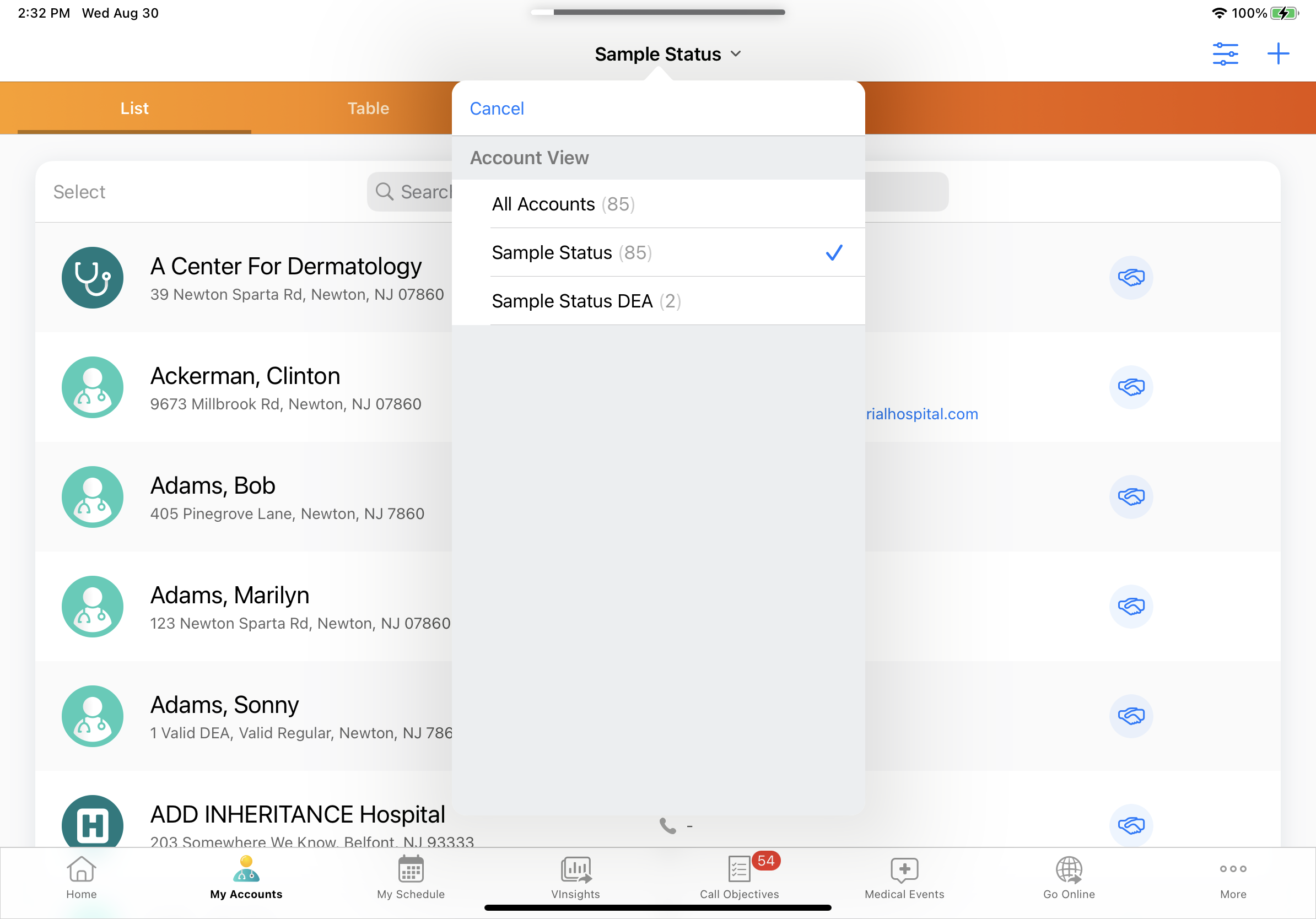
Account views can be accessed from the following places:
- My Schedule Week View
- My Schedule Scheduler View
- My Accounts List View
- My Accounts Table View
When users navigate to a List or View in My Accounts, a loading indicator displays while accounts are loading.
Vault CRM sorts accounts alphabetically by the name__v field on the account__v object. Certain actions, including sorting, exporting, and selecting accounts, are temporarily disabled until the data is fully loaded.
The Name column (Browser platform) or the Formatted Name column (iOS platform) always displays as the first column in Table View for all Account Views and Lists. For Child Account Views, the Parent Name column displays first, followed by the Child Name column.
Using Account Views for Child Accounts
Users can perform the following actions from a child account view:
- Create, edit, or delete views
- Schedule a call for the child account
- Export child account information to CSV or Excel
The following activities are not supported for child accounts:
- Mass Update
- Account Lists
- Launch Media
Displaying Child Account TSF Information in My Accounts (iPad)
If the user's territory matches a territory both the parent and child accounts are aligned to, Vault CRM searches for a related childaccount_tsf__v record matching the territory. If a match is found, the childaccount_tsf__v data displays. If a match is not found, data does not display.
The All Addresses option in the view criteria is not supported for Child Account views. Preferred Address is used instead.
Dynamic Attributes in My Accounts Views
Users can create and edit Views in My Accounts using Dynamic Attributes as search criteria, and display those attributes as columns.
The All Accounts view is not customizable. Create a new view to customize the display and include Dynamic Attributes.
The display of Dynamic Attributes on My Accounts depends on the following conditions:
- Dynamic Attributes columns display to end users with View permission to the dynamic_attribute_configuration__v record used for the column. If the user does not have permission, the column does not display to the end user but all other columns display.
- The enable_query_reporting__v checkbox on the dynamic_attribute_configuration__v object is selected
Searching Account Views
Users can enter search terms to filter the data in the current view. Search terms can be entered as follows:
- By selecting a column header and entering a search term in the field (Browser)
- By entering search terms in the primary Search field at the top of the My Accounts page (iPad, iPhone)
The search is case-insensitive, and includes Text, Picklist values, Numbers, and Text Formula fields.
Exporting Views to CSV or Excel (Browser platform)
To export a My Accounts view to CSV or Excel, select All Actions and select CSV or Excel.
All data in the view is included in the exported CSV or Excel file. Exporting from List view (instead of Table view) only exports the hard-coded fields displayed in the List view. An error displays if the export is unsuccessful.
Using Account Lists as
End Users
Accounts can be grouped into lists for organization. Unlike views, account lists are static.
Account lists can be used in the following ways:
- Organizing accounts
- Naming, following, and generating reports in X-Pages based on specific account lists
- Creating lists online and syncing to other devices
- Displaying different accounts, addresses, or TSF-related information for each account in an account list on the Online and Windows Tablet platforms
Users can create and manage Account Lists using Vault CRM. Account Lists display from a drop-down list at the top of the My Accounts screen (iPad, iPhone) or the Lists section of the Views and Lists subtab of the My Accounts screen (Browser).
iPhone users cannot create new account lists or views, though they can access existing account lists and views.
When users navigate to a List or View in My Accounts, a loading indicator displays while accounts are loading.
Vault CRM sorts accounts alphabetically by the name__v field on the account__v object. Certain actions, including sorting, exporting, and selecting accounts, are temporarily disabled until the data is fully loaded.
The Name column (Browser platform) or the Formatted Name column (iOS platform) always displays as the first column in Table View for all Account Views and Lists. For Child Account Views, the Parent Name column displays first, followed by the Child Name column.
Selecting a list name displays the accounts in that list.
Users on the iPad platform can view the Alphabar to navigate to accounts starting with a specific letter if there is at least one account in the list.
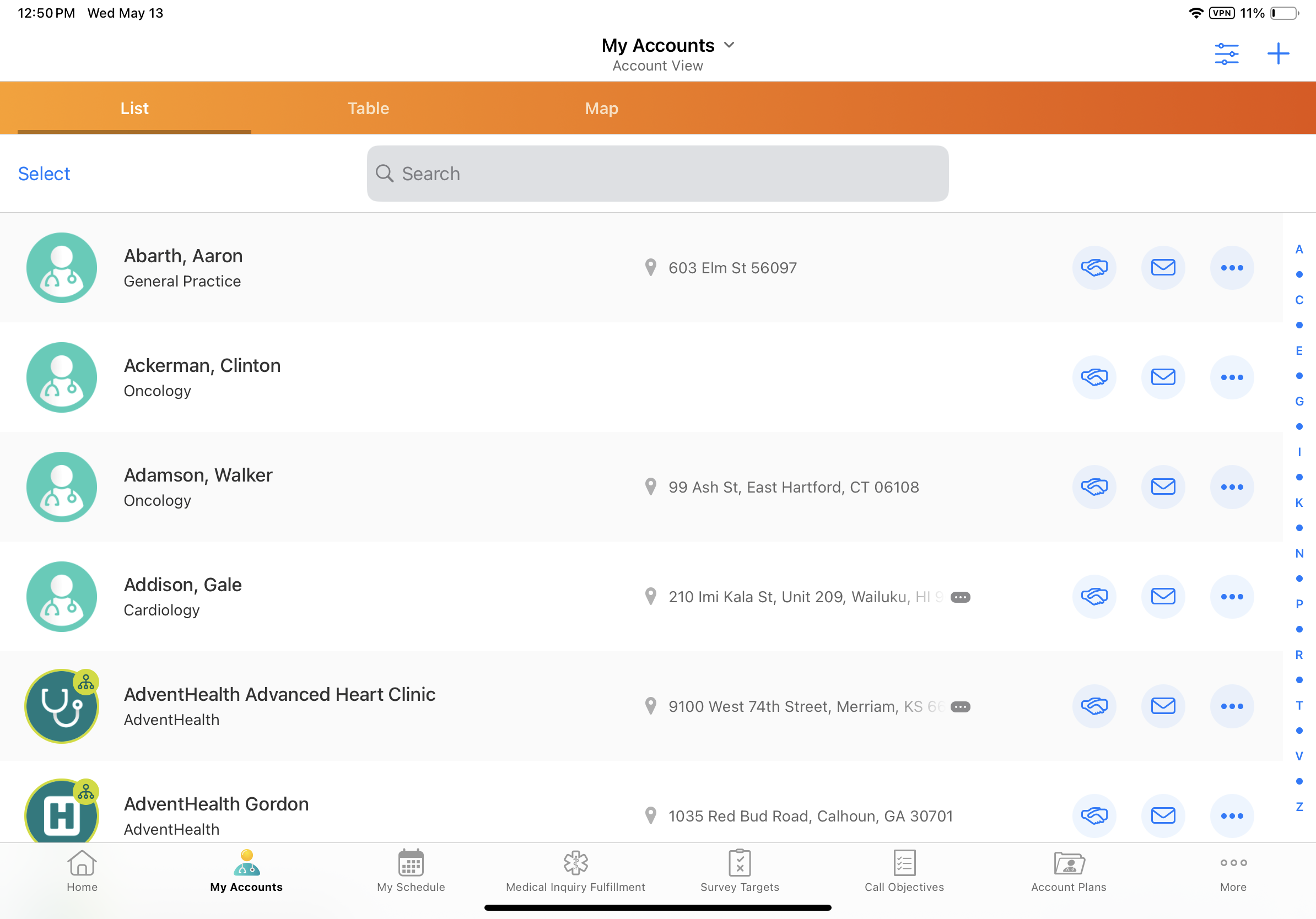
Creating an Account List
To create an Account List, select the Create New List button in the Account Lists section. The Create New List modal dialog displays, allowing the user to enter a list name and select a color.
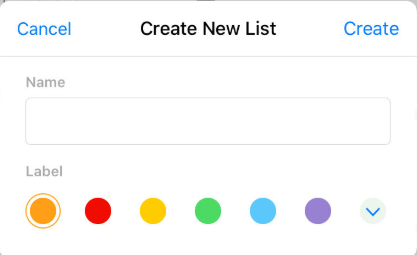
To add an account to a list:
- Open any list the account is a member of.
- Choose the Select option at the top of the list to display the Select Accounts screen.
- Select the radio button for each account you want to add, and then select Add to List to display the Add to List modal.
- Select the list you want to add the account to. If the account is not already in that Account List, the number of accounts increments by one.
Deleting an Account List
To delete an Account List, select Edit Lists from the lists drop-down menu to display the Edit Lists screen. Select the delete button next to a list to delete it.
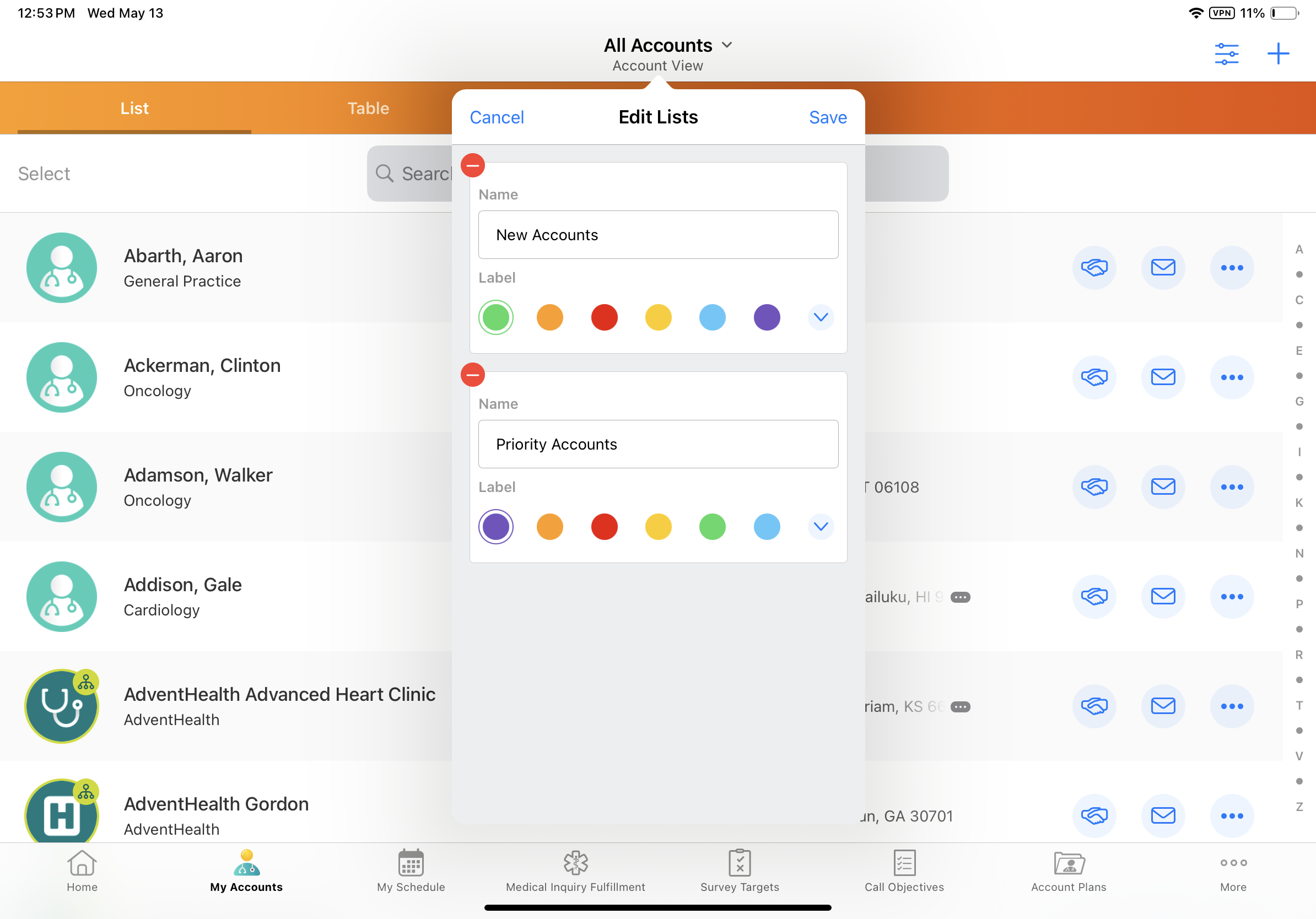
To delete an account from an Account List:
- Select a list name to show the accounts contained within the list.
- Choose the Select option at the top of the list to display the Select Accounts screen. Select the radio button for each account you want to delete, and select Remove at the bottom of the screen.
Dynamic Attributes in My Accounts Lists
Dynamic Attributes are automatically added as columns to Account Lists if the user has permission to view Dynamic Attributes.
A maximum of 19 columns can display for an account list. This limit includes Dynamic Attributes and the other columns defined for the list. Dynamic Attributes display after other defined columns in alphanumeric order from left to right. The user must have permission to view the Dynamic Attribute record used to view the column.
Searching Account Lists
Users can enter search terms to filter the data in the current list. Search terms can be entered as follows:
- By selecting a column header and entering a search term in the field (Browser)
- By entering search terms in the primary Search field at the top of the My Accounts page (iPad, iPhone)
The search is case-insensitive, and includes Text, Picklist values, Numbers, and Text Formula fields.
Exporting Lists to CSV or Excel (Browser platform)
To export a My Accounts list to CSV or Excel, select All Actions and select CSV or Excel.
All data in the list is included in the exported CSV or Excel file. Exporting a list when column filters are applied only exports the accounts currently displayed in the list. An error displays if the export is unsuccessful.